
Ford 427 Crate Engine: Specs, Performance & FAQ
Unboxing the Beast: A Guide to the Ford 427 Crate Engine
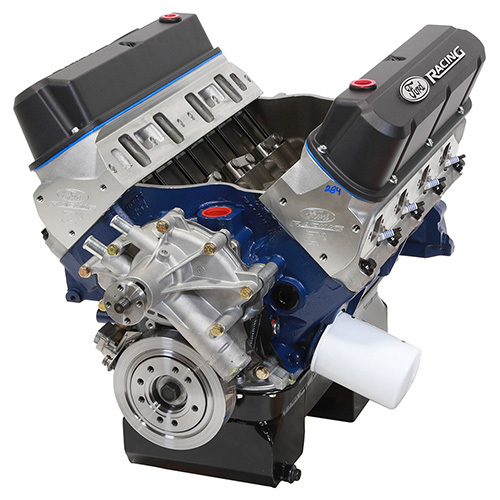
When the name "427" is mentioned in Ford circles, it commands respect. It brings to mind a golden era of American muscle and racing dominance. Today, Ford Performance keeps that legendary spirit alive with a modern powerhouse: the 427 cubic inch crate engine, part number M-6007-Z2427F. This isn't just an engine; it's a complete solution for anyone looking to drop serious, reliable power into their project car.
If you're in the research phase for your next build, you’ve come to the right place. We're going to dive deep into what makes this engine tick, from its tough-as-nails internals to its impressive performance figures. Let's explore why this 427 crate engine might be the perfect heart for your machine.
At the Core: Power and Performance Specs
The spec sheet for the Ford 427 crate engine reads like a wish list for any performance enthusiast. It's engineered to deliver thrilling power while maintaining the drivability and durability needed for both the street and the strip.
The headline numbers are impressive: this engine produces a dyno-proven 535 horsepower at 5,600 RPM and a massive 540 lb-ft of torque at 4,800 RPM. This power and torque output gives you incredible acceleration and a wide, usable powerband. The maximum recommended RPM is a safe 5,600, ensuring the engine operates well within its limits for a long life.
This performance comes from a classic combination of displacement and smart engineering. The engine has a displacement of 427 cubic inches, achieved through a bore x stroke of 4.125 inches by 4.00 inches. This "stroker" setup is key to its massive torque production. A street-friendly compression ratio of 10.5:1 means you can run it on premium unleaded pump gas, making it practical for regular use.
A Look Inside: Built for Durability
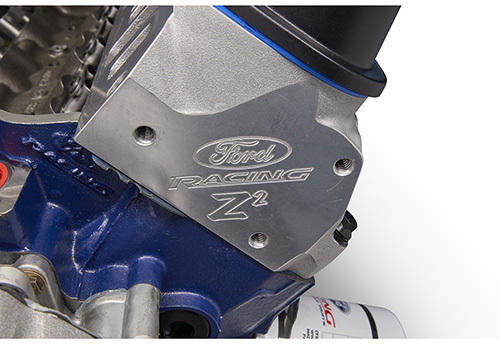
Big power numbers are great, but they don't mean much without a foundation built to handle them. Ford Performance built the 427 with a focus on durability, using high-quality components from top to bottom.
The Foundation: Block and Rotating Assembly
It all starts with a solid block type: the legendary Ford Performance Boss 351 block with a 9.5-inch deck height. This iron block is known for its strength, providing a rigid foundation that prevents flex under high stress.
Inside, the rotating assembly is made entirely of forged steel components. This includes:
- A SCAT forged steel crankshaft to handle immense rotational forces.
- SCAT forged steel H-beam connecting rods with high-strength ARP bolts.
- Forged Mahle pistons with floating wrist pins, designed for high-compression performance.
This all-forged bottom end is crucial for durability, ensuring the engine can withstand the pressures of high horsepower and repeated heavy use. The entire assembly is also internally balanced, which results in a smoother-running engine with less vibration and reduced wear on internal parts.
Top-End Power: Heads and Valvetrain
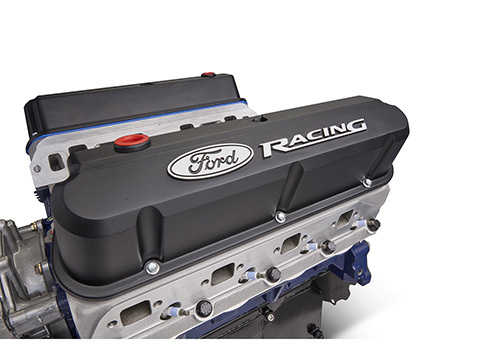
An engine is just an air pump, and the 427’s top end is designed to move a lot of air. The cylinder head specifications are a major highlight. It uses Ford Performance "Z2" aluminum heads, which offer significant advantages in airflow over older designs while retaining factory mounting points for accessories.
The valvetrain components are chosen to match the engine's high-performance goals:
- Large valve sizes of 2.05 inches for the intake and 1.60 inches for the exhaust allow for excellent breathing.
- The heads are fitted with PAC 1219X ovate beehive valve springs, which provide reliable valve control at high RPM without unnecessary stress.
- A hydraulic roller camshaft is at the center of it all. With a lift of .594" on the intake and .618" on the exhaust, and a duration of 242°/248° at .050", this cam profile provides a fantastic balance of power, torque, and a classic muscle car idle. The hydraulic roller design also reduces friction and wear, contributing to the engine's overall longevity.
To operate everything smoothly, Ford recommends specific ignition timing set to 32 degrees at 4,000 RPM.
Ideal Use Cases: Where Does the 427 Shine?
The Ford 427 crate engine is incredibly versatile. Its combination of big-block power in a small-block package makes it a popular choice for a wide range of projects.
This engine is an ideal choice for:
- Classic Mustang Restomods: Drop it into a vintage Mustang for a modern, reliable powertrain that delivers incredible performance.
- Kit Cars and Cobras: Many Cobra replicas and kit cars are designed around a 351 Windsor-based engine, making this 427 a perfect fit.
- Street Rods: Give your custom street rod a heart with a legendary name and the power to back it up.
- Classic Trucks: Upgrading an old F-100 or Bronco with this engine creates a unique and powerful hauler or off-roader.
Essentially, if your project is based on a platform that originally housed a Ford small block (like a 289, 302, or 351W), the 427 is a powerful and relatively straightforward upgrade that transforms the vehicle's character.
The Ford Performance 427 Crate Engine is more than just a collection of parts; it's a testament to a legacy of power, engineered for the modern enthusiast. It offers a complete package of immense power, street-friendly drivability, and long-term durability. By using high-quality forged components and well-matched parts, Ford has created an engine that honors its heritage while providing the reliability today's builders demand. For anyone in the research phase of a serious build, the 427 deserves a very close look.
Frequently Asked Questions (FAQ)
Here are answers to some common questions about the Ford 427 Crate Engine.
What additional parts are needed to complete the installation?
While the 427 comes as a long block, you will need a few key components to get it running. You will need to purchase an intake manifold (Ford recommends the Edelbrock Super Victor #2924), a carburetor, a distributor (MSD #85840 is recommended), a flywheel or flexplate with a neutral balance, an air cleaner, and various hoses and belts for your specific application.
Can this engine be used in an emissions-controlled vehicle?
No, this engine is designed and intended for competition or off-highway use only. It is not legal for installation in any pollution-controlled vehicle that is driven on public roads and highways, as it is likely to violate emissions laws.
What kind of fuel does the Ford 427 engine require?
Due to its 10.5:1 compression ratio, the recommended fuel type is premium unleaded gasoline. Using a lower-octane fuel can lead to engine knock or "detonation," which can cause severe damage.
What makes a hydraulic roller camshaft a good choice?
A hydraulic roller camshaft offers several benefits over older flat-tappet designs. It reduces internal friction, which frees up a small amount of horsepower and improves efficiency. More importantly, it allows for more aggressive cam profiles without the excessive wear associated with flat-tappet cams, contributing to both performance and durability.
Recent Posts
-
Ford 427 Crate Engine: Specs, Performance & FAQ
Unboxing the Beast: A Guide to the Ford 427 Crate Engine When the name "427" is mentioned in Ford c …Feb 25th 2026 -
J-Bar Tuning Guide: Controlling Roll & Balance in Dirt Cars
Master Dirt Track Handling: A Guide to J-Bar Tuning & Adjustments Ever feel like your dirt car has …Feb 17th 2026 -
Step-by-Step Guide: How to Change a 2-Stroke Dirt Bike Piston
How to Change a 2-Stroke Dirt Bike Piston: A Step-by-Step Guide There is nothing quite like the sou …Jan 27th 2026


