
Mastering 4-Link Suspension: Dirt Track Adjustment Guide
Unlock Speed: Mastering 4-Link Rear Suspension Adjustments on Dirt
Your car is fast in practice, hooking up perfectly when the track is tacky. But then the feature starts, the track slicks off, and suddenly your dirt late model or dirt modified falls flat. You're fighting the wheel, pushing up the track, and watching the competition pull away. Sound familiar? The fix isn't always in your tire choice or your driving style; it is often hiding in your 4-link geometry.
The 4-link rear suspension is the gold standard in dirt racing for a reason. It offers a level of tunability that other systems simply can’t match. When you understand how to manipulate the links, you gain precise control over rear steer, forward bite, entry rotation, and mid-corner stability. It is the difference between a race car that reacts to the track and one that fights it.
In this guide, we are breaking down the mechanics of the 4-link suspension. We will move past the complex engineering jargon and focus on what matters to you: key adjustments like link angles, mounting points, and birdcage timing, and exactly what those changes do to your handling on Saturday night. Master these tweaks, and you will be able to adapt to any track condition in minutes without resorting to major part swaps.
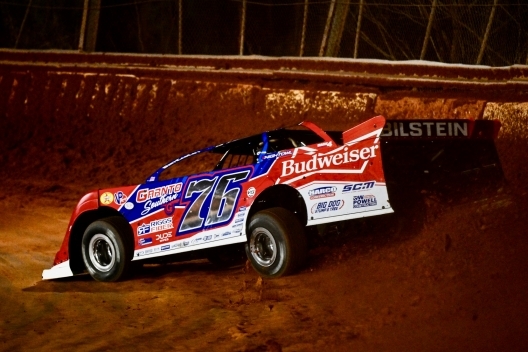
How a 4-Link Actually Works
At its core, a 4-link suspension system uses two upper bars and two lower bars to connect the rear axle to the chassis. These four links control the movement of the axle during every phase of driving: acceleration, braking, cornering, and chassis roll. While it might look like a simple collection of suspension tubes, the geometry created by these bars dictates how your tires plant into the clay.
The Physics of Grip
To understand the 4-link, you have to understand the Instant Center (IC) and Anti-Squat.
Imagine drawing a line through the center of your top bar and another line through the center of your bottom bar. The point where those two imaginary lines intersect in front of the rear axle is the Instant Center. The position of this point determines how the car reacts when you hit the gas.
- Anti-Squat: This refers to the suspension's resistance to compressing under acceleration. By adjusting your links to move the IC, you can force the rear tires down into the track (increasing traction) or allow the car to squat more (potentially softening the hit).
The Magic of Rear Steer
This is why dirt racers prefer the 4-link over leaf springs. As the chassis rolls into a corner, the suspension links travel in an arc. Because the bars are set at different angles and lengths, they pull or push on the axle housing. This causes the rear axle to actually steer, known as Roll Steer or Rear Steer.
You can dial in "passive" rear steer to help the car rotate. For example, if the suspension geometry pulls the left rear wheel forward and pushes the right rear wheel back as the car rolls right, the rear axle steers to the left. This helps pivot the car around the corner, which is critical on slick tracks where front-end grip is limited. Conversely, on a tacky track, you might neutralize this steer to keep the car driving straight and stable.
Key Adjustments and What They Do
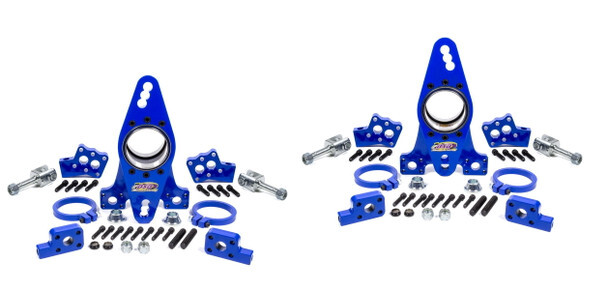
The versatility of the 4-link comes from its mounting points. Most chassis feature multiple holes on both the frame and the birdcages (the brackets on the axle housing), allowing you to change the angle of the bars. Here is a breakdown of the primary adjustments and their real-world effects on handling.
1. Adjusting the Upper Links
Moving the upper links is one of the most common ways to tune entry and exit performance. This adjustment primarily changes the amount and direction of your rear steer.
- How to make it: Move the mounting bolt up or down on the frame bracket or the birdcage.
- Primary Effect: Steeper angles generally create more rear steer. If you raise the frame mount or lower the birdcage mount on the left side, you effectively shorten that distance as the car rolls, pulling the left wheel forward.
- Driver Feel: If you are struggling with a "loose entry" (the back end wants to come around too fast), raising the left upper bar can help planting the tire. However, on a slick track, if you have a "tight exit" (the car won't finish the turn), lowering the right upper bar can induce rotation.
- Best For: Slick tracks often require more steer for rotation, while heavy, tacky tracks require less steer for forward drive.
2. Adjusting the Lower Links
While upper links are great for steering geometry, the lower links have a massive impact on forward bite and anti-squat.
- How to make it: Move the lower link mounting holes up or down.
- Primary Effect: Raising the lower links generally increases the angle of intersection (Instant Center), which increases anti-squat. This drives the tires harder into the track surface upon acceleration.
- Driver Feel: If the car "spins the tires off the corner" and you just can't get traction, raising the lower links helps pin the rear end. Conversely, if the car is bouncing or hopping (too much bite), lowering them can smooth it out.
- Best For: Heavy or high-horsepower cars often need more anti-squat to manage the power without breaking traction immediately.
3. Birdcage Timing (Indexing)
Birdcage timing, also known as clocking or indexing, refers to the rotational position of the birdcage on the axle tube relative to the chassis.
- How to make it: Adjust the rod lengths or indexing holes to rotate the birdcage forward or backward.
- Primary Effect: This controls individual side steer. By rotating the birdcage, you change the pickup points for the links, effectively altering the leverage and steer on just that corner.
- Driver Feel: This is for fine-tuning. If the "right rear won't hook," clocking the right birdcage forward can help apply force more effectively.
- Best For: Fixing asymmetric handling issues, such as a car that drives well into the corner but is inconsistent on the exit.
4. Asymmetric Setups (Left vs. Right)
In dirt racing, we only turn left. Therefore, your suspension setup rarely needs to be symmetrical.
- How to make it: Running different angles or bar lengths on the left side versus the right side.
- Primary Effect: By running a steeper angle on the left side (for example), you create a natural "pull" to the left. This helps the car turn without the driver having to input as much steering angle.
- Driver Feel: This reduces driver fatigue and helps the car set into the corner naturally.
- Best For: Almost all circle track racing. Standard setups usually favor more drive on the left rear to help getting off the corner.
Real-World Scenario
Let's look at a practical example. We were running a Late Model on a dry-slick surface at Berlin Raceway in Michigan. The car was decent, but the driver had to wait too long to get back on the throttle because the nose wouldn't rotate at the center of the turn.
We lowered the left upper link by just one hole on the frame. This slight angle change introduced just enough rear steer to help the car pivot mid-corner. The driver could pick up the throttle 20 feet sooner, and we gained 0.3 seconds on the lap time—all without changing a spring or a shock.
Safety Note: When making these adjustments, move one hole at a time. Drastic changes can make the car unpredictable. Also, always re-check your pinion angle after moving links, as changing geometry rotates the axle housing.
Quick Adjustment Cheat Sheet
When you are in the pits and have five minutes before the next heat, you don't have time to calculate physics equations. You need to know what to fix. Use this reference guide to troubleshoot common handling problems.
- Problem: Tight on Entry (Car won't turn in).
-
- Fix: Lower the left upper link or clock the left birdcage back. This reduces the rear steer that fights the turn.
- Problem: Loose on Exit (Back end slides out under power).
-
- Fix: Raise the right lower link or add stagger. This helps plant the right rear tire and drive the car straight.
- Problem: No Forward Bite (Spinning tires).
-
- Fix: Increase anti-squat by raising the lower links. This forces the tire into the ground.
- Problem: Car is "Darty" (Twitchy, too much rear steer).
-
- Fix: Flatten the link angles. The closer the bars are to parallel, the more neutral and stable the car will feel.
Note: Never trust a setup change blindly. Make one adjustment, run 5–10 laps, and record the feedback. If it didn't help, move it back before trying something else.
Advanced Tips & Common Mistakes
Mastering the 4-link is about balance. It is easy to get lost in the geometry and forget that the suspension works as a system. Here are a few advanced tips to keep you on the right track.
Pairing Adjustments
Your 4-link doesn't work in a vacuum. It interacts with your J-bar (Panhard bar), shocks, and tire stagger. For instance, if you add a lot of rear steer to help rotation, you might need to adjust your shock compression to control how quickly that steer happens. If the car rolls over too fast, the steer happens too abruptly, unsettling the chassis.
Avoid Over-Adjusting
A common mistake is making "swing for the fence" changes. Moving a bar three holes at once creates radical geometry shifts that can make the car dangerous or impossible to drive. Stick to single-hole adjustments.
The Essential Tool Kit
You cannot eyeball these settings. To be consistent, you need:
- A quality tape measure (for checking wheel base and lead).
- A digital angle finder (for checking pinion angle and bar angles).
- A dedicated setup notebook.
Pro Tip: Keep a notebook for every track you visit. Record the track conditions, your tire selection, and exactly which holes your 4-link bars were in. Over time, you will build a database of what works on a "tacky" track versus a "slick" track, taking the guesswork out of race day.
The Power of Adaptation
The difference between a mid-pack car and a winner is often the ability to adapt. Track conditions change. The clay dries out, the cushion moves up, and the groove wears down. If your setup is static, you will eventually be left behind.
The 4-link suspension gives you the mechanical leverage to adapt to these changes dynamically. It allows you to change the physical behavior of the car to suit the dirt you are driving on. By understanding how to manipulate your link angles, anti-squat, and rear steer, you stop surviving the track conditions and start mastering them.
Recent Posts
-
Single vs. Double vs. Triple Pass Radiators
Single vs. Double vs. Triple Pass Radiators: Which Is Best for Your Dirt Track Race Car? When you'r …Oct 1st 2026 -
Best Engine Oil for 602/604 Crate Racing Engines
Best Engine Oil for 602/604 Crate Racing Engines Quick answer: There is no single "best" oil for 60 …Aug 31st 2026 -
Street Stock Spring Free Height & Diameter Guide
How to Measure Spring Free Height & Diameter for Dirt Street Stocks When you’re replacing springs o …Aug 25th 2026


